
Why Spaces Feel the Way They Do
“We shape our buildings; thereafter they shape us.”
— Winston Churchill
A room is never neutral.
The spaces we live and work in shape how we feel, move, rest, focus, connect, and recover. Light changes our energy. Layout influences behaviour. Materials affect comfort. Sound, air, proportion, color, texture, and views all contribute to the way a space is experienced by the body before it is consciously understood by the mind.
At STUDIO309, we approach interior design through this relationship between space, the individual, nature, and daily rhythm. The goal is not simply to make a room look beautiful. It is to create environments that feel grounded, intuitive, and supportive of real life.
The Problem of Disconnection
Many interiors are designed around appearance first.
They may photograph well, follow current trends, or look complete on the surface, but still feel unsettled, overstimulating, flat, or disconnected from the people who use them every day. A space can be visually finished and still fail to support rest, clarity, ease, or belonging.
This disconnection often happens when design is treated as decoration rather than environment.
A home is not only a collection of finishes and furnishings. It is a daily setting for nervous systems, relationships, routines, transitions, work, sleep, nourishment, and repair. When those needs are overlooked, the result can be subtle but persistent: visual noise, poor flow, harsh lighting, lack of restoration, or spaces that do not respond to the natural patterns of the day.
STUDIO309 begins by asking a different question:
How should this space support the people who live within it?

Environmental psychology helps explain why spaces affect us.
It studies the relationship between people and their surroundings, including how physical settings influence behaviour, perception, comfort, stress, attention, and wellbeing. In interior design, this means the experience of a room is not accidental. It is shaped by measurable conditions: light, sound, layout, privacy, density, temperature, materiality, and access to nature.
This is why two rooms with similar square footage can feel completely different.
One may feel calm, open, and easy to move through. Another may feel tense, cluttered, or tiring. These responses are not only aesthetic preferences. They are often the body reading the environment: seeking orientation, comfort, safety, rhythm, and sensory balance.
Good design works with that response rather than against it.
Environmental Psychology
Biophilic Design
Biophilic design is based on the understanding that humans have an inherent connection to nature.
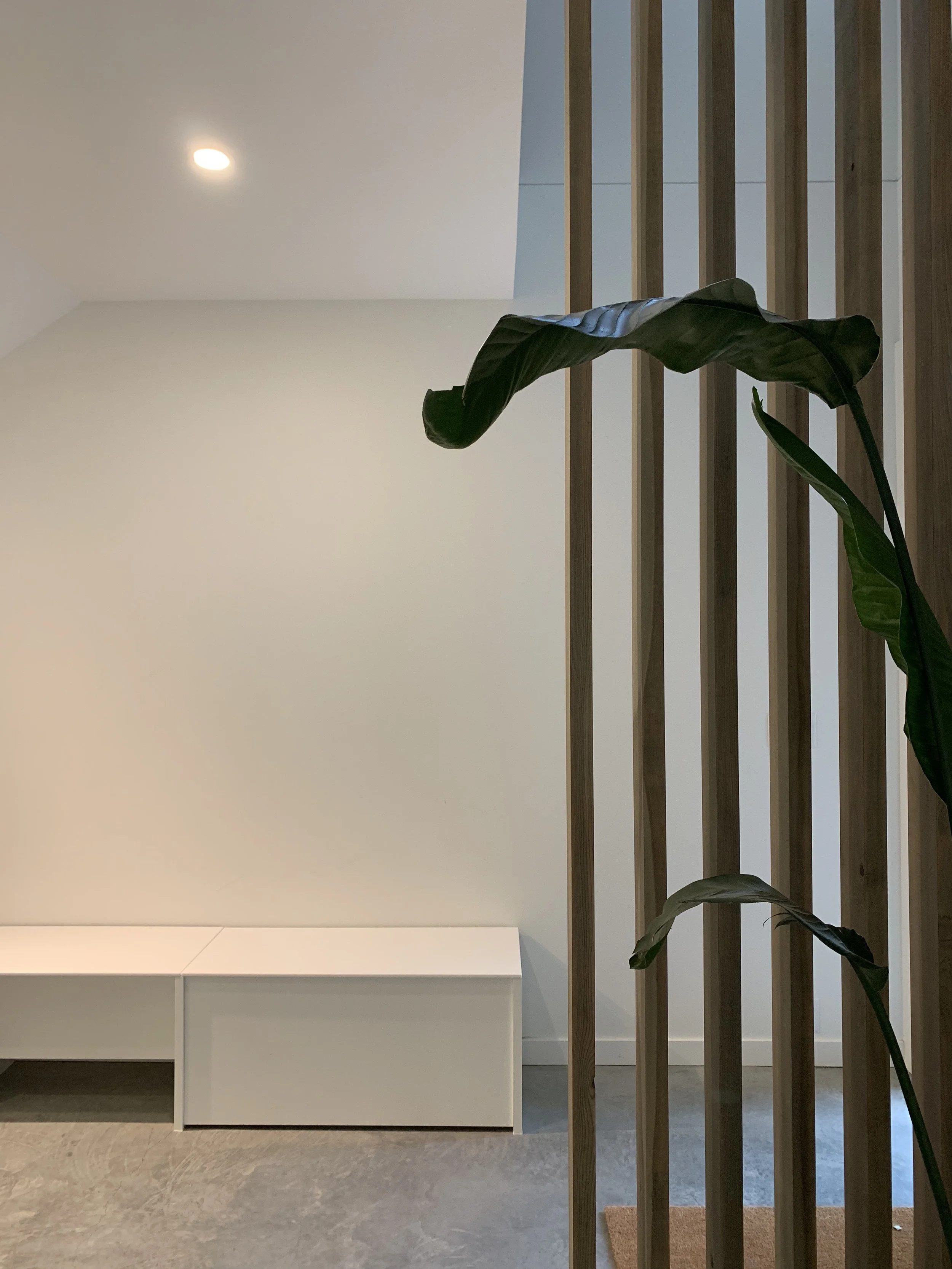
It is often simplified into adding plants, but its real value is deeper. Biophilic design considers how natural light, organic materials, views, air movement, texture, pattern, seasonal change, and spatial variation can support the way people feel and function indoors.
For STUDIO309, biophilic design is not a style. It is a design lens.
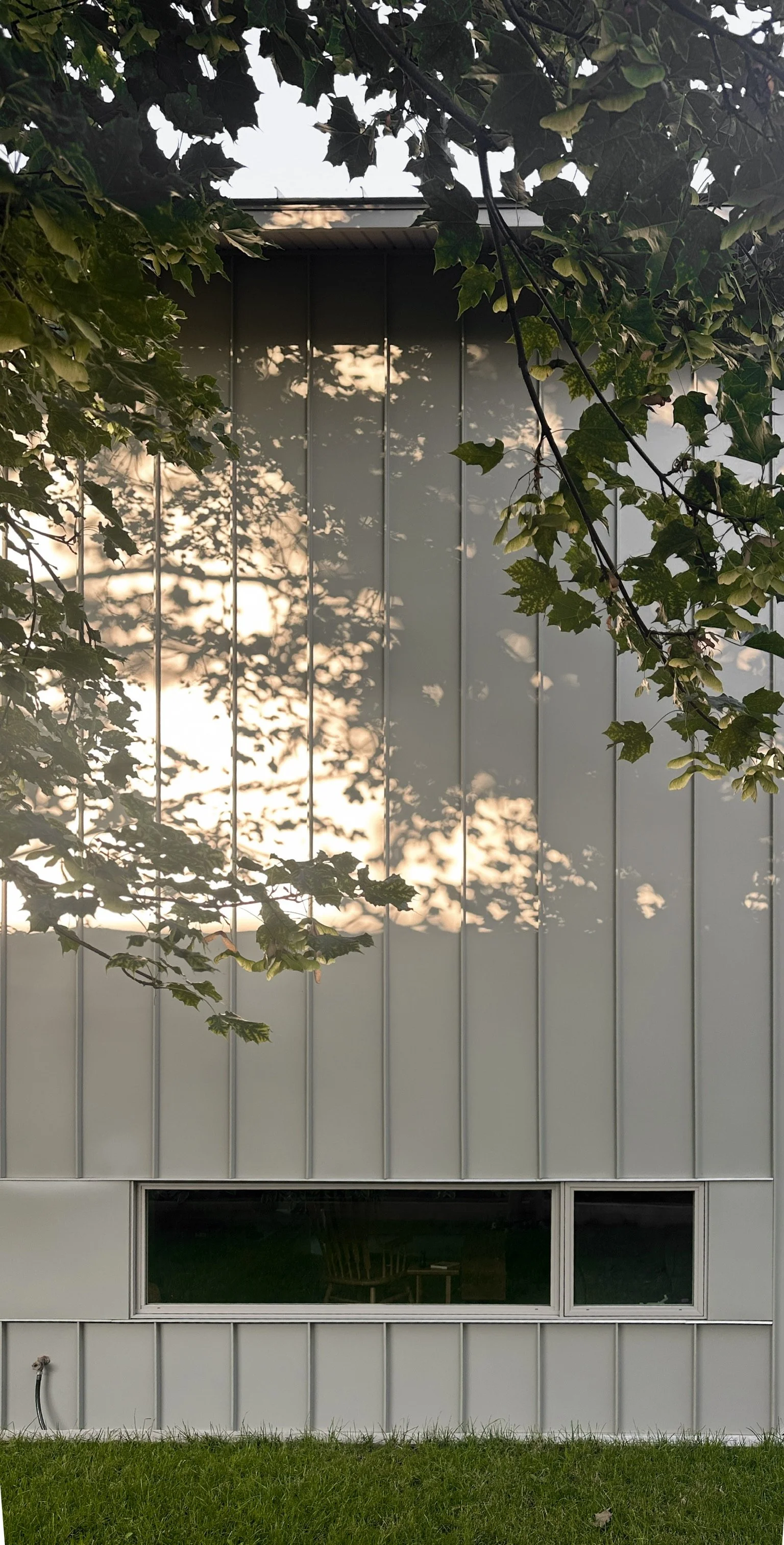
It may appear through a softened transition between indoors and outdoors. It may be expressed through natural materials that age with dignity, a lighting plan that changes throughout the day, a view that draws the eye outward, or a palette that reflects the surrounding landscape.
The purpose is not to imitate nature superficially. The purpose is to restore connection to place the body back in relationship with natural cues that modern interiors often remove
Human Biology and Natural Rhythms
We are rhythmic beings.
Our bodies respond to light and darkness, activity and rest, stimulation and quiet, openness and enclosure. A well-designed interior should respect these patterns rather than flatten them.
Morning light can support alertness. Softer evening lighting can signal transition and rest. Materials with tactile depth can create grounding. Spaces with clear circulation reduce friction. Areas of retreat allow the nervous system to settle. Connections to nature can offer visual relief, perspective, and restoration.
When these elements are considered together, the interior becomes more than a backdrop. It becomes a supportive environment for daily life.
The Environmental Response
Every design decision creates a response.
A narrow hallway, a low ceiling, a window placement, a hard surface, a cool light temperature, or an unresolved layout all communicate something to the body. Some decisions create ease. Others create tension.
STUDIO309 studies these responses carefully.
We consider how a person enters a room, where the eye lands, how the space transitions from public to private, how natural light moves throughout the day, where the body can pause, and how materials contribute to warmth, calm, durability, and sensory comfort.
This is where design becomes more precise.
Rather than choosing elements in isolation, we look at how the full environment works together: functionally, emotionally, physically, and atmospherically.
The Experience
The best interiors are felt before they are analyzed. They allow people to arrive, exhale, orient, gather, retreat, focus, and restore. They support the practical needs of daily life while also creating a deeper sense of ease and connection.
This is the experience STUDIO309 designs toward. Not perfection. Not performance. Not spaces that exist only to be looked at.

Spaces that feel considered.
Spaces that support wellbeing in quiet, practical ways.
Spaces that reconnect people to themselves, to one another, and to the natural rhythms that shape daily life.
Because the way a space feels is not incidental.
It is designed.